
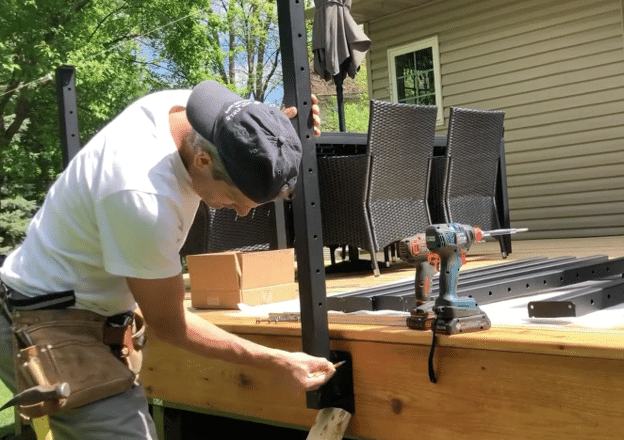
A cable railing can make a deck, balcony, staircase, or interior loft feel more open without sacrificing safety. The clean lines and nearly unobstructed views are a big part of the appeal, but the materials, engineering, and fabrication behind the finished look matter just as much.
Not every cable railing system is built the same. Before choosing one, look closely at the cable and hardware materials, the strength of the posts, how the layout will meet applicable building requirements, and whether the system is truly made for your project.
1. Start With Marine-Grade 316 Stainless Steel
The cable and fittings are exposed to weather, moisture, temperature changes, and everyday use. Material quality makes a real difference over time.
Look for marine-grade 316 stainless steel cable and fittings. Compared with lower-grade stainless options, 316 stainless has added corrosion resistance that is especially valuable in wet environments, around pools or lakes, and in places where de-icing chemicals and harsh winter weather are common.
Lower-priced systems may use materials that look similar at first but are more prone to staining, pitting, or corrosion over time. A quality cable railing system should use stainless components designed to stay clean, strong, and visually consistent.
For a darker, more architectural look, ask about black oxide stainless cable. It offers a refined black finish while maintaining the benefits of stainless steel. It is not the same as a powder-coated cable.
2. Make Sure the System Is Designed for Your Layout and Applicable Code
Cable railing is not a one-size-fits-all product. Decks, staircases, balconies, lofts, and commercial spaces all have different dimensions, angles, attachment conditions, and code considerations.
One common requirement is often called the four-inch sphere rule. In general, guardrail openings must be designed so a four-inch sphere cannot pass through them under the conditions required by the applicable code. Because cable naturally has some flexibility, cable spacing, post spacing, cable tension, and intermediate supports all matter.
Do not rely on a generic post-spacing recommendation alone. A properly designed system accounts for the length of each cable run, the position of end posts, stair angles, intermediate supports, and the requirements in your local jurisdiction.
A custom system gives you a better starting point than trying to adapt a universal kit after the fact. Your contractor or local building official should always confirm the requirements that apply to your project.
3. Look Closely at the Strength of the Posts
The posts do the structural work. They need to withstand the combined tension of multiple cables while keeping the system straight, secure, and visually clean.
Thin, mass-produced posts can flex under cable tension. When that happens, cables may loosen, the railing can look uneven, and the system may require repeated adjustment.
Paul Kraft MPLS uses heavy-wall 2-by-2-inch aluminum posts with a quarter-inch wall thickness. These posts are built for custom cable railing applications and provide the strength needed to keep cable runs properly tensioned without compromising the clean, modern profile of the railing.
Strong posts also create a better finished appearance. Cables stay aligned, rails remain straight, and the entire system feels intentional rather than assembled from off-the-shelf parts.
4. Choose Precision Fabrication Over On-Site Guesswork
Clean cable railings depend on exact placement. If holes are uneven, cable runs are not level, or stair angles are approximated, the finished railing can look crooked even when the materials themselves are high quality.
Look for posts that are precision-drilled in the shop. CNC-machined hole placement helps ensure consistent spacing and alignment before the system reaches your project.
At Paul Kraft MPLS, the aluminum posts are fabricated, drilled, welded, and powder-coated in Minneapolis. That work is completed before shipping so you receive components made specifically for your layout, not a pile of generic pieces that need to be figured out on site.
This approach creates a cleaner installation process and a better final result, especially on stairs, corners, changes in elevation, and custom deck layouts.
5. Understand the Difference Between a Generic Kit and a Custom System
A generic cable railing kit may seem like the easier or less expensive option, but it often shifts the difficult work to the homeowner or installer. You may be left determining post placement, drilling metal, trimming components, troubleshooting angles, and trying to make standard pieces work in a nonstandard space.
A custom system is built around your actual measurements.
Paul Kraft MPLS follows a practical process designed to reduce guesswork:
- Send photos, drawings, and rough measurements for your project.
- Paul Kraft MPLS builds and ships the custom posts and top rails for installation.
- After the posts and rails are installed, final cable measurements are taken. The cables are then cut and crimped to fit your exact project and sent for completion.
This process is especially valuable for stairs, decks with multiple sections, balcony railings, and larger projects where precision matters. Instead of forcing a standard kit to fit your space, the finished cables are made for the space you built.
Custom Railings Without the Guesswork
Paul Kraft MPLS builds custom cable railing systems in Minneapolis and ships nationwide. Each system is made to order for homeowners, builders, contractors, architects, and designers who want strong materials, clean modern lines, and a better fit than a generic railing kit can provide.
The team fabricates heavy-wall aluminum posts, precision-drilled cable runs, welded details, and durable powder-coated finishes in-house. Stainless steel cable, custom stair angles, and project-specific details are handled with the same focus on fit and finish.
Paul Kraft MPLS systems are made to order, not pulled from a shelf. They are a strong fit for planned deck, staircase, balcony, loft, and larger exterior projects where quality, custom fabrication, and direct support matter.
Start Your Custom Cable Railing Project
Have a project photo, drawing, or measurements ready? Request an itemized custom quote from Paul Kraft MPLS and get a system designed around your space.
For ideas and completed-project inspiration, visit the Paul Kraft MPLS Inspiration Gallery.
