
Cable Railing vs Wood Balusters: Which Is Better for Your Deck?
When planning a new deck or stair railing, many homeowners find themselves deciding between two popular options: traditional wood balusters or modern cable railing.
Both systems serve the same purpose—providing safety and structure—but they create very different visual and functional results.
Understanding the differences can help you choose the right railing for your home.
Appearance: Open Views vs Traditional Style
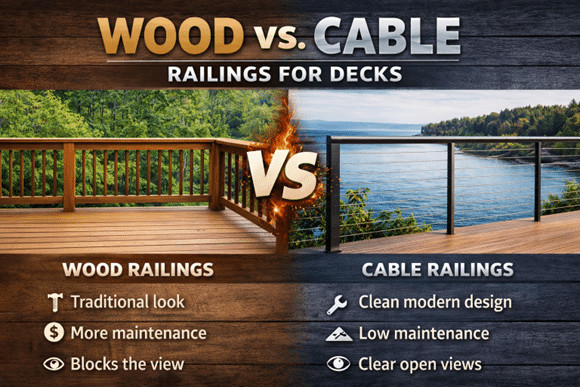
Wood balusters are the classic railing style most people are familiar with. Vertical spindles create a traditional look that works well with many deck designs.
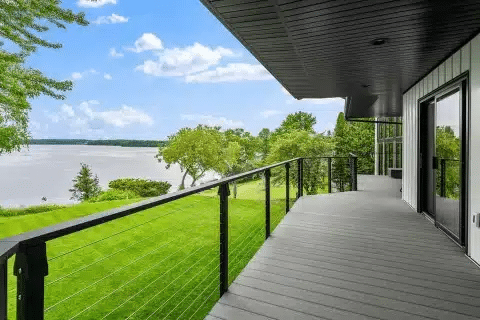
Cable railing systems, however, offer a much more open appearance.
Instead of vertical spindles, stainless steel cables run horizontally between posts. This creates a clean, modern look while allowing views to remain unobstructed.
Many homeowners choose cable railing specifically because it:
- Keeps scenic views visible
- Makes decks feel more open
- Adds a modern architectural look
Maintenance and Longevity
Wood balusters require ongoing maintenance. Because they are exposed to the elements, they may need:
- Regular painting or staining
- Repairs due to weathering
- Occasional replacement of damaged pieces
Cable railing systems typically require less maintenance.
Stainless steel cables are designed to resist corrosion and remain strong over time. Paired with powder-coated aluminum posts or hardwood rails, they provide long-term durability.
For many homeowners, this lower maintenance requirement is a major advantage.
Visual Weight and Light
Traditional wood balusters create a heavier visual barrier. While they provide privacy, they can also block light and views.
Cable railings have a much lighter visual presence.
Because the cables are thin and horizontal, they allow light to pass through and maintain visibility beyond the deck or staircase.
This is one reason cable railing is especially popular for:
- Lake homes
- Homes with wooded views
- Mountain properties
- Elevated decks or balconies
Installation and Customization
Wood baluster railings are typically built entirely on-site.
Cable railing systems are often fabricated with precision components designed to fit specific measurements.
At Paul Kraft MPLS, the ordering process is designed to work with real construction timelines:
- Customers send photos and basic measurements
- Posts and top rails are fabricated and shipped
- Final cable measurements are sent after installation and cables are cut to fit
This process helps ensure a precise fit while keeping installation straightforward.
Which Option Is Right for Your Home?
Both railing styles can work well depending on the design of the home and the goals of the project.
Wood balusters offer:
- Traditional appearance
- Familiar construction style
- Compatibility with classic deck designs
Cable railings offer:
- Modern aesthetics
- Open views
- Minimal visual obstruction
- Durable aluminum and stainless steel components
For homeowners who want a clean, contemporary look that highlights their surroundings, cable railing has become an increasingly popular choice.
If you’re planning a deck or stair project and considering cable railing, you can request a quote below.
You can also explore completed projects for inspiration in the Paul Kraft MPLSInspiration Gallery
.
